
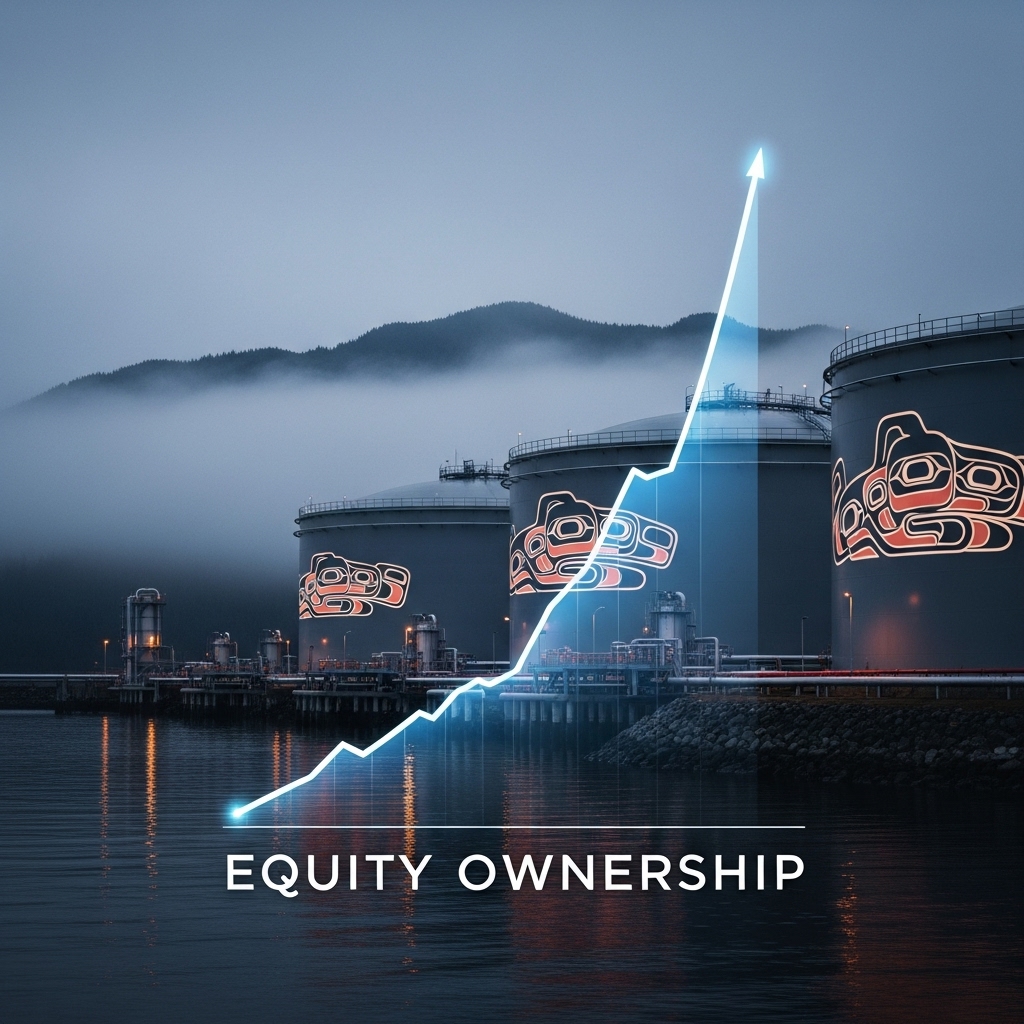
For decades, “Economic Reconciliation” was a buzzword. In 2026, it is a bankable asset.
After a quiet launch in late 2024, the Canada Indigenous Loan Guarantee Corporation (CILGC) has officially hit its stride. With a $10 billion war chest, the federal government is no longer just “consulting” with Nations—it is co-signing their loans.
This is the technical breakdown of how the program works, the massive Nisga’a-led LNG project leading the charge, and why “equity” is the new standard for major projects in Canada.
The Mechanics: From “Stakeholder” to “Shareholder”
The CILGC solves the oldest problem in the Indian Act: the inability to leverage on-reserve assets for capital.
The Old Model: A mining company wants to build on traditional territory. They offer an “Impact Benefit Agreement” (IBA)—essentially a royalty payment in exchange for silence. The Nation gets cash, but zero control.
The 2026 Model: Under the CILGC, the federal government provides a 100% sovereign guarantee on loans taken out by Indigenous Nations.
The Result: First Nations can borrow money at “AAA” government rates (the lowest possible interest rate) to buy real equity stakes—often 10% to 50%—in the projects themselves. They stop being bystanders and start being Board Members.
The Flagship: Ksi Lisims LNG (Nisga’a Nation)
The proof of concept is happening right now on the west coast.
In November 2025, the Ksi Lisims LNG project was designated a priority “Nation-Building” project. Led by the Nisga’a Nation, this floating LNG facility isn’t just “approved” by Indigenous leadership; it is owned by them.
Because of the loan guarantees, the Nisga’a Nation isn’t just collecting rent from a pipeline. They are equity partners in the infrastructure itself, projected to generate billions in revenue that will fund language revitalization, housing, and healthcare in the Nisga’a Valley for generations.
The Scorecard: Impact Benefit Agreements (IBA) vs. Equity
For policy analysts and community leaders, the distinction between the old way and the new way is critical.
| Feature | Traditional IBA (Old) | Equity Ownership (New) |
|---|---|---|
| Revenue Model | Fixed Royalty / Cash Payment | Share of Profits (Dividends) |
| Governance | None. (Observer status) | Board Seats. (Voting power) |
| Risk | Low. (Guaranteed payout) | Moderate. (Tied to market prices) |
| Financing Cost | N/A | “AAA” Rate (via CILGC) |
People Also Ask
What is the Canada Indigenous Loan Guarantee Corporation?
The CILGC is a federal crown corporation launched in late 2024. Its mandate is to provide up to $10 billion in loan guarantees to help Indigenous Nations purchase equity stakes in major natural resource and energy projects.
How does Ksi Lisims LNG benefit the Nisga’a Nation?
Ksi Lisims LNG is a net-zero LNG export facility led by the Nisga’a Nation. Through equity ownership, the Nation will receive a share of the project’s long-term profits, securing independent revenue for community services, infrastructure, and cultural preservation.
Who qualifies for the Indigenous Loan Guarantee?
The program is sector-agnostic (excluding gaming). It is open to First Nations, Inuit, and Métis communities looking to invest in major projects—from wind farms and transmission lines to pipelines and critical mineral mines.
Is this different from the Alberta Indigenous Opportunities Corporation (AIOC)?
Yes, but the concept is similar. The AIOC is a provincial program specific to Alberta. The CILGC is federal, meaning it applies to projects across Canada, including huge infrastructure builds in British Columbia and Ontario.