
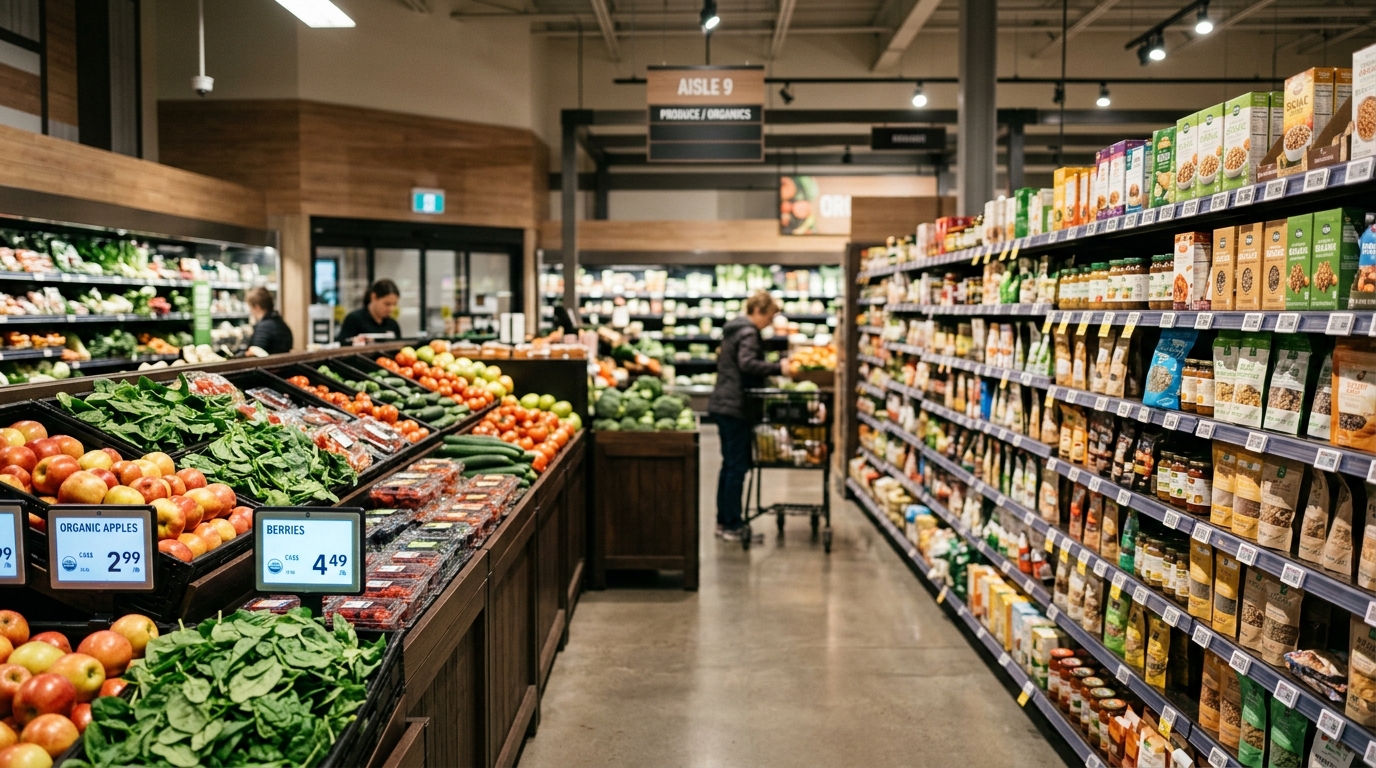
After years of political posturing, parliamentary hearings, and fierce corporate resistance from Canada’s retail titans, the Canadian Grocery Code of Conduct is officially operational in 2026. Championed by consumer advocates and independent food producers as a vital shield against arbitrary supplier fines and monopolistic bully tactics, the code promised to inject fairness into an industry dominated by a tight oligopoly (Loblaw, Empire/Sobeys, Metro, Walmart, and Costco). Yet, as Canadian families push their carts through supermarket aisles, checkout totals remain painfully high. As detailed in our previous investigations into food waste dynamics and supply management economics, addressing grocery affordability requires examining structural market realities rather than voluntary corporate pledges.
Here is the economic reality behind Canada’s 2026 Grocery Code of Conduct—and why fixing wholesale contractual fairness has not translated into immediate grocery bill relief.
1. What the Grocery Code of Conduct Actually Regulates
A fundamental misconception among Canadian consumers is that the Grocery Code of Conduct acts as a government price-cap mechanism. It does not. The code is a commercial contractual framework designed to govern the contentious relationships between food manufacturers/farmers and retail conglomerates:
- Elimination of Arbitrary Fines & Deductions: Historically, major grocers routinely deducted penalties from supplier invoices for late deliveries, minor packaging deviations, or unsold inventory without mutual agreement. The code introduces mandatory dispute adjudication.
- Standardized Supply Agreements: Retailers can no longer demand unilateral price cuts or retroactive fees simply because a competitor dropped prices.
- Transparency on “Listing & Shelving Fees”: Clamps down on extortionate fees charged to food processors just to place a new Canadian product on physical shelf real estate.
2. The Core Problem: A Five-Player Oligopoly & Wholesale Stickiness
While the code creates a more predictable operating environment for independent food producers (such as local bakeries, produce growers, and dairy processors), it contains zero legal provisions compelling supermarkets to lower retail shelf prices:
- Lack of Price Elasticity: In an industry where five corporate entities control over 75% of the Canadian grocery market, wholesale cost reductions are rarely passed downward to consumers. Instead, margin relief is absorbed as corporate operating profits or reinvested into high-margin private label brands (e.g. President’s Choice, Compliments, Selection).
- The Missing Foreign Competitors: The Competition Bureau of Canada explicitly noted in its retail market study that lower food prices require international discount competitors (such as Germany’s Aldi or Lidl). However, Canada’s immense geographic dispersion, dual-language packaging requirements, and restrictive real estate restrictive covenants have discouraged foreign discounters from entering the market.
3. The 2026 “Shrinkflation” & Unit-Pricing Crackdown
Where Canadian consumers are seeing tangible regulatory changes in 2026 is at the shelf price-tag level. Following amendments to federal deceptive marketing rules under the Competition Act and provincial consumer protection statutes:
- Mandatory Standardized Unit Pricing: Retailers in participating provinces are now legally required to display clear price-per-unit metrics (e.g., price per 100 grams or 100 milliliters) in a standardized font size directly beside the retail package price, preventing deceptive packaging illusions.
- Shrinkflation Disclosure Banners: Supermarkets are facing increased regulatory pressure and consumer class actions over “shrinkflation”—the practice of quietly shrinking package contents (e.g., a cereal box dropping from 450g to 375g) while maintaining or increasing the price tag.
- Checkout Fee Transparency: As explored in our report on credit card surcharge and drip pricing rules, non-transparent auxiliary charges at checkout are now subject to stiff administrative penalties.
Canada’s Grocery Code of Conduct: Myths vs. 2026 Reality
| Area of Regulation | What the Public Expected | What the 2026 Code Actually Delivers |
|---|---|---|
| Retail Shelf Prices | Immediate 5% – 10% price drops at checkout | Zero price controls; prices determined by grocer margins |
| Supplier Contract Fairness | Fair competition between brands | Binding arbitration for unilateral fines & deductions |
| Shrinkflation & Hidden Fees | Ban on smaller package sizing | Mandatory unit pricing & Competition Act drip pricing rules |
| Market Competition | New low-cost foreign grocery entrants | High barrier to entry remains for international discounters |
People Also Ask (PAA)
Will the Canadian Grocery Code of Conduct lower food prices?
Not directly. The code establishes fair trading rules between suppliers and supermarket chains to prevent arbitrary fees and unilateral contract changes. However, it does not set price controls on shelf prices, which remain at the discretion of major grocery chains.
What are property controls and restrictive covenants in Canadian grocery?
Restrictive covenants are clauses in commercial real estate leases where a major supermarket chain (like Loblaw or Sobeys) forbids the landlord from leasing nearby space to any competing grocery store or specialty bakery, preventing competition from opening in the same plaza or neighborhood.
What can Canadian consumers do to spot shrinkflation?
Always look past the large promotional sticker and check the unit price (cost per 100g or 100ml) printed on the shelf label. Comparing unit prices across brands reveals whether a “sale” item is actually more expensive per weight than non-discounted alternatives.