
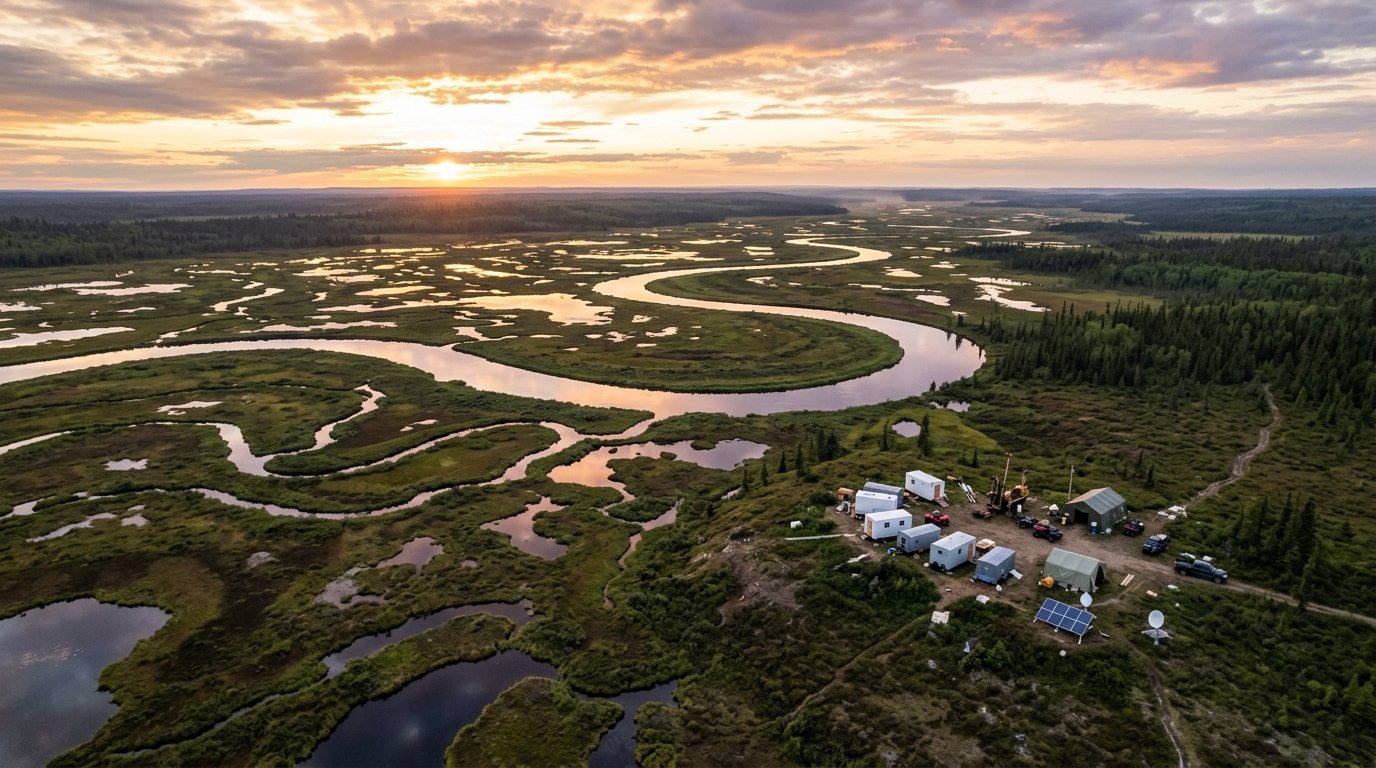
Deep within the James Bay Lowlands of Northern Ontario lies one of the most resource-rich yet ecologically delicate geological formations on the planet: the Ring of Fire. Estimated to hold upwards of $60 billion in high-grade nickel, copper, cobalt, and North America’s only commercially viable chromite deposits, the region has been framed by federal and provincial leaders as the foundational linchpin for Canada’s multi-billion-dollar domestic electric vehicle (EV) battery supply chain. However, as documented across our investigations into Section 35 constitutional protections and modern Indigenous self-government frameworks, unlocking Canada’s mineral wealth is no longer an exercise in unilateral government permits.
In 2026, the Ring of Fire has become ground zero for a monumental legal and economic showdown over Free, Prior, and Informed Consent (FPIC), the United Nations Declaration on the Rights of Indigenous Peoples (UNDRIP), and the environmental preservation of the world’s second-largest terrestrial carbon sink.
1. The Ecological Stakes: The “Breathing Lands” of the James Bay Lowlands
The geological reality of the Ring of Fire is inseparable from its environmental geography. The mineral deposits sit beneath the Breathing Lands—over 5,000 square kilometers of pristine muskeg, wetlands, and peatlands that store more carbon per square meter than the Amazon rainforest:
- Global Carbon Sink Vulnerability: The peatlands store an estimated 35 billion tonnes of carbon. Constructing hundreds of kilometers of all-season heavy-haul access roads, open-pit mines, and processing infrastructure risks disturbing the hydrological balance, potentially turning a vital global carbon sink into a massive greenhouse gas emitter.
- Watershed Protection: The rivers flowing through the Ring of Fire (including the Attawapiskat, Albany, and Winisk watersheds) sustain wild fish stocks, migratory waterfowl, and the traditional hunting grounds of downstream Treaty 9 First Nations.
2. The Legal Battlefield: Duty to Consult vs. Free, Prior, and Informed Consent (FPIC)
The constitutional debate in 2026 centers on the evolving legal threshold governing major infrastructure on unceded and treaty lands:
- The Traditional “Duty to Consult” (Section 35): Historically, Canadian courts held that the Crown must consult and accommodate Indigenous communities, but did not grant First Nations an absolute “veto” power over resource development.
- The UNDRIP / FPIC Shift: With the federal adoption of the United Nations Declaration on the Rights of Indigenous Peoples Act, First Nations leadership argues that international law and modern reconciliation require genuine, binding consent—Free, Prior, and Informed Consent—before a single shovel breaks ground. Downstream nations argue that provincial environmental assessments conducted piecemeal fail to meet cumulative impact standards established by the Supreme Court of Canada.
3. The First Nations Leadership Landscape: Community Divergence
One of the most critical nuances of the Ring of Fire is that First Nations in Treaty 9 are sovereign communities with distinct strategic priorities:
- The Road Proponents (Marten Falls & Webequie First Nations): As the designated co-lead proponents of the Northern Road Link and Supply Road environmental assessments, these communities see road access as an essential pathway to end generational fly-in isolation, build clean water infrastructure, and leverage modern Indigenous loan guarantee programs for direct equity ownership in mining joint ventures.
- The Moratorium Coalition (Neskantaga, Fort Albany, Attawapiskat, Kashechewan): These downstream nations have declared a formal moratorium on road construction and mining permits, demanding a comprehensive, Indigenous-led Regional Impact Assessment and a guarantee of veto power to protect their watersheds from industrial tailings runoff.
Ring of Fire Stakes: Economic Potential vs. Indigenous Governance (2026)
| Dimension / Pillar | Industry & Government Objective | Indigenous Governance & Ecological Reality |
|---|---|---|
| Critical Minerals Output | $60B+ in Nickel, Chromite & Copper for EV Batteries | Requires uncompromised environmental tailings containment |
| Constitutional Approval Standard | Procedural Crown Consultation & Accommodation | Binding Free, Prior, and Informed Consent (FPIC / UNDRIP) |
| Economic Model | Corporate Royalties & Local Employment Quotas | 50/50 Equity Partnerships & Revenue Sovereignty |
| Environmental Integrity | Mitigated road corridors and culvert engineering | Protection of 35B tonnes of peatland carbon & watersheds |
People Also Ask (PAA)
What minerals are found in Ontario’s Ring of Fire?
The Ring of Fire deposit in Northern Ontario contains world-class reserves of chromite (essential for stainless steel), high-grade nickel, copper, cobalt, platinum group metals, and gold, valued at over $60 billion.
What is Free, Prior, and Informed Consent (FPIC) under UNDRIP?
FPIC is an international human rights standard requiring that Indigenous communities be informed of, and give their formal consent to, any project affecting their lands, waters, and resources before permits or development can proceed.
Why are some First Nations opposed to the Ring of Fire roads?
Communities such as Neskantaga and Attawapiskat oppose road construction without comprehensive regional impact assessments due to risks of irreversible damage to James Bay peatland carbon sinks, water contamination in downstream river systems, and violations of Treaty 9 sovereignty.