
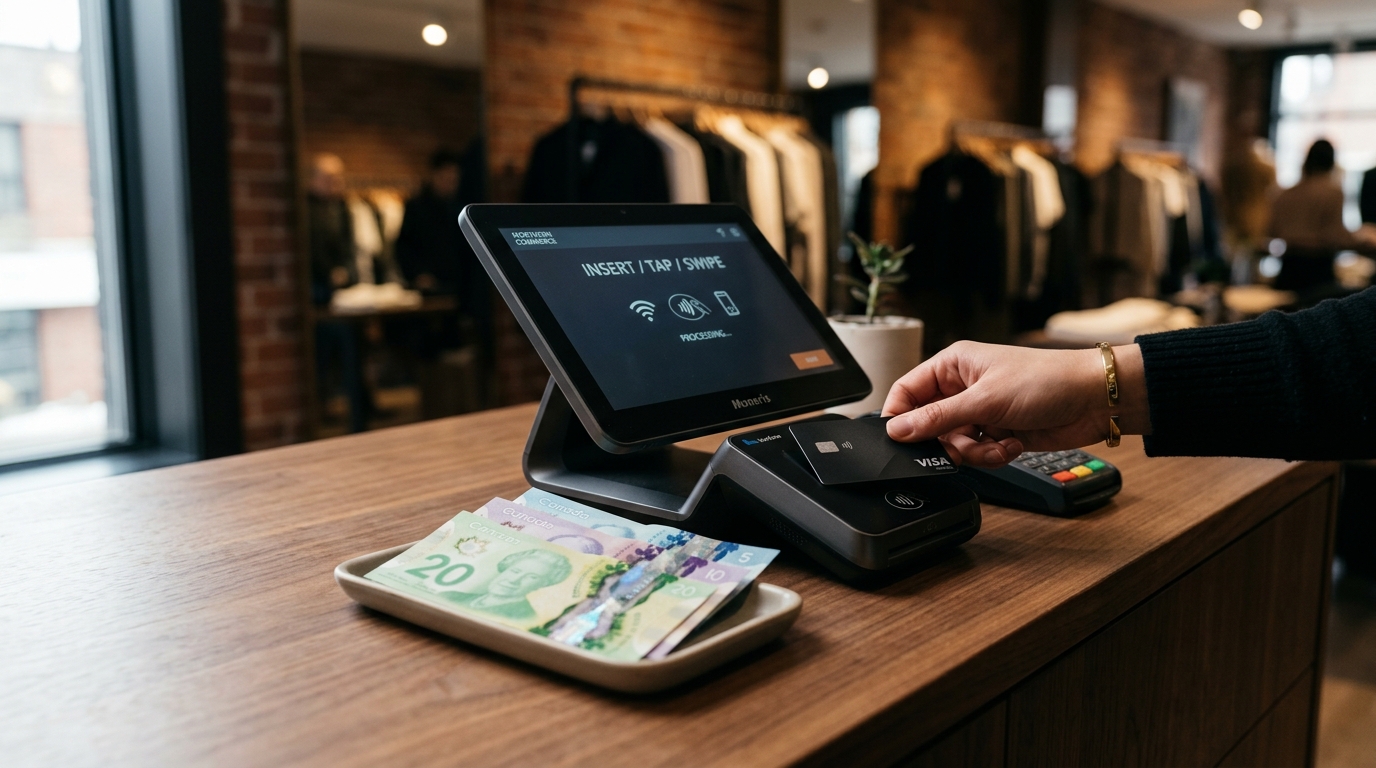
Few consumer interactions trigger more immediate frustration at a Canadian checkout counter than a surprise 1.5% to 2.4% surcharge tacked onto your bill the moment you tap a Visa or Mastercard. Following years of litigation and class-action settlements between merchants and credit card giants, the regulatory framework governing checkout fees in Canada has fundamentally shifted. As shoppers navigate rising everyday costs alongside questions of whether businesses are legally allowed to go card-only, understanding your rights at the point-of-sale has never been more urgent.
In 2026, Canadian businesses do possess the legal right to pass credit card processing fees to consumers—but only under strict federal disclosure caps and divergent provincial consumer protection laws.
1. The Legal Framework: The 2.4% Interchange Surcharge Cap
Historically, the “no-surcharge rule” established by Visa and Mastercard prevented merchants from charging customers an extra fee for paying with credit. Following a multi-billion-dollar class-action settlement finalized with Canadian courts, businesses gained the discretion to pass on their interchange fees (the processing cost charged by banks per transaction). However, strict federal rules govern this practice:
- The 2.4% Hard Cap: Businesses cannot treat surcharging as a profit center. A merchant is legally restricted to charging their actual cost of acceptance or a maximum ceiling of 2.4%, whichever is lower.
- Mandatory Prominent Signage: Under the payment networks’ Code of Conduct, a retailer cannot surprise you at the terminal. They must display explicit signage at the physical store entrance, at the cash register, and itemize the exact dollar surcharge on the final receipt. For e-commerce, the surcharge must be transparently displayed on the checkout page prior to payment authorization.
2. The 2026 Competition Act & “Drip Pricing” Crackdown
The enforcement environment intensified dramatically with recent amendments to Canada’s Competition Act under Bill C-59. The federal government officially categorized drip pricing—the deceptive practice of advertising an initial price and later tacking on mandatory, non-government fees at checkout—as an explicitly illegal civil and criminal deceptive marketing practice.
If a Canadian merchant displays a product on a shelf for $50.00 and attempts to add a mandatory checkout processing fee without prior conspicuous disclosure before the buying decision is made, they face severe administrative monetary penalties from the Competition Bureau of Canada. Surcharging must be strictly optional based on the chosen payment rail, with at least one non-surcharged payment method made available.
3. The Provincial Exception: Why Quebec Is Different
While credit card surcharging is legally permitted across nine provinces and three territories, Quebec remains the solitary exception in Canada:
- Section 224(c) of Quebec’s Consumer Protection Act: Quebec law strictly prohibits merchants from demanding a price higher than the advertised all-inclusive price. Because credit card surcharges cannot be charged in Quebec, retailers operating within the province must absorb interchange fees or raise baseline shelf prices across all payment methods.
- National Retailers: Most nationwide supermarket chains, big-box department stores, and major airlines have chosen not to implement surcharges nationally to maintain operational consistency across Quebec and the rest of Canada.
4. Debit (Interac) vs. Credit: What Retailers Cannot Surcharge
A crucial distinction every Canadian consumer must know is the difference between credit cards and debit cards:
- Credit Cards (Visa, Mastercard, Amex): Permitted to have surcharges (capped at 2.4% outside Quebec), subject to advance disclosure rules.
- Debit Cards (Interac): Surcharges on Interac debit are strictly prohibited. The settlement rules and Canadian Code of Conduct explicitly ban merchants from adding a percentage surcharge to Interac debit payments. If a small business adds a 2% fee when you tap your bank debit card, they are in direct violation of the Canadian payment network rules.
Canadian Credit Card Surcharge Rules by Province & Payment Type (2026)
| Jurisdiction / Payment Rail | Credit Card Surcharge Permitted? | Interac Debit Surcharge Permitted? | Legal Maximum Cap |
|---|---|---|---|
| Ontario, BC, Alberta & ROC (Rest of Canada) | Yes (With advance disclosure) | No (Prohibited) | 2.4% (or actual fee) |
| Quebec (Consumer Protection Act) | No (Illegal under Sec. 224) | No (Prohibited) | 0% (Not allowed) |
| E-Commerce & Online Ticketing | Yes (Must be itemized before payment) | No (Prohibited) | 2.4% (Drip pricing rules apply) |
People Also Ask (PAA)
Can a business in Canada charge whatever percentage they want for credit card payments?
No. Canadian merchants are capped at their actual cost of acceptance or a maximum limit of 2.4%. Charging higher amounts (such as 3% or 5%) is a violation of payment network settlement rules.
Can a Canadian store charge a surcharge on Interac debit?
No. Surcharging is strictly limited to credit cards (Visa, Mastercard, American Express). Canadian payment network regulations prohibit merchants from adding surcharges to Interac debit transactions.
Is credit card surcharging legal in Quebec?
No. Quebec’s Consumer Protection Act (Section 224) prohibits businesses from charging a consumer more than the all-inclusive advertised price. Therefore, merchants in Quebec cannot add credit card surcharges.