
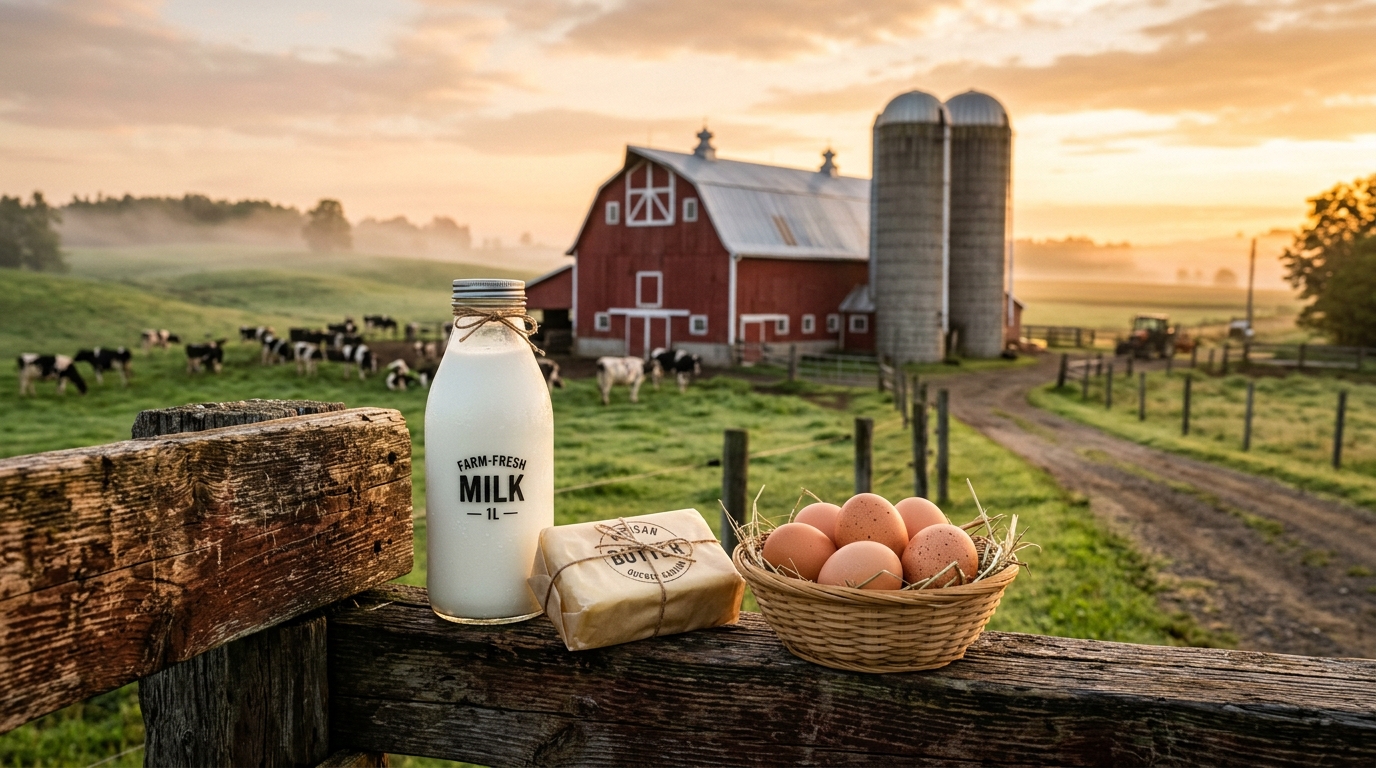
Walk through the refrigerated dairy and poultry aisles of any Canadian supermarket in 2026, and the price tags tell an unmistakable story: a single pound of butter regularly eclipses $8.50, a gallon of milk hovers near $6.00, and standard chicken breasts command upwards of $18 to $22 per kilogram. Across the southern border in New York, Washington, or Michigan, identical staples sell for 30% to 50% less. While retail supermarket chains frequently bear public blame—as detailed in our investigative exposé on the Canadian Grocery Code of Conduct and national food pricing—the primary architectural force keeping prices elevated is Canada’s federal Supply Management System. As explored in our foundational analysis on how supply management works and the realities of food waste in Canada, the system represents one of the most protected agricultural regimes on Earth.
Originally designed in the 1970s to stabilize farm incomes and prevent boom-and-bust agricultural crashes, supply management has evolved in 2026 into a high-stakes constitutional, trade, and consumer debate.
1. The Tri-Pillar Architecture: How the Quota Cartel Operates
Supply management controls five core agricultural sectors in Canada: dairy (milk, cheese, butter, yogurt), broiler chicken, turkey, table eggs, and hatching eggs. It functions through three interconnected legal mechanisms:
- 1. Production Control (Production Quotas): Marketing boards (such as the Canadian Dairy Commission and Dairy Farmers of Canada) set strict annual limits on how much milk, poultry, or eggs each licensed farmer is permitted to produce. Producing above quota is strictly penalized, and dumping excess milk is legally enforced to prevent market gluts from driving down prices.
- 2. Minimum Cost-of-Production Pricing (Farm-Gate Floor): Prices paid to farmers are not set by supply and demand, but by a centralized formula based on farmers’ reported cost of production plus a guaranteed profit margin. When feed, fuel, or fertilizer prices rise, minimum farm-gate prices are automatically adjusted upward.
- 3. Prohibitive Import Tariffs (Border Protection): To prevent cheap foreign dairy and chicken from entering the Canadian market, the federal government imposes staggering tariff-rate quotas (TRQs): 241% on fluid milk, 298% on butter, 245% on cheese, and 238% on chicken.
2. The Quota as an Asset: The Million-Dollar Barrier to Entry
Because it is illegal to sell commercial dairy or poultry in Canada without a government-issued quota, the quota itself has become an intensely valuable, tradable financial asset:
- The Cost of a Dairy Cow’s Quota: In provinces like Ontario and Quebec, the right to produce milk from a single dairy cow (one kilogram of butterfat per day) is capped at roughly $24,000 to $30,000 per quota unit.
- Generational Wealth Locking: A modest 100-cow family dairy farm requires over $2.5 million to $3 million in quota assets alone, before purchasing a single tractor, barn, or acre of land. This astronomical capital barrier makes it virtually impossible for new, young, or independent farmers to enter the industry without inheriting an existing quota.
3. The Trade Dilemma: USMCA 2026 Renegotiation Pressures
While Canadian dairy farmers argue the system protects food sovereignty and ensures family farms receive a living income without requiring taxpayer-funded government bailouts (unlike US dairy farmers who receive direct federal subsidies):
- Trade Retaliation on Canadian Exporters: In global trade negotiations, Canada’s fierce defense of supply management frequently forces trade negotiators to make painful concessions in other vital export sectors, including Canadian beef, pork, canola, softwood lumber, and automotive manufacturing.
- Regressive Consumer Tax: Economic research from university food institutes confirms that supply management functions as a regressive tax—disproportionately penalizing lower-income families who spend a larger percentage of their weekly budget on basic protein, dairy, and eggs.
Canada’s Supply Management vs. Free-Market Agricultural Systems (2026)
| Economic Dimension | Canadian Supply Management | Unregulated / Free-Market (US / NZ) |
|---|---|---|
| Consumer Retail Pricing | 30% – 50% Higher (Butter $8+, Milk $6+) | Lower Market-Driven Prices |
| Farmer Income Stability | Guaranteed profitable farm-gate prices | Volatile boom-and-bust commodity cycles |
| Government Taxpayer Subsidies | $0 Direct Subsidies (Paid at checkout) | Billions in annual taxpayer farm bailouts |
| Import Tariffs & Global Trade | 200% – 300% Border Tariffs (USMCA Friction) | Open global trade & export expansion |
People Also Ask (PAA)
Why is dairy and chicken so expensive in Canada?
Dairy and poultry prices in Canada are controlled by the federal Supply Management system, which limits domestic production, sets guaranteed minimum prices for farmers, and levies 200%–300% tariffs on foreign imports to prevent cheaper competition.
What products are covered under Canadian Supply Management?
Supply management in Canada exclusively controls five agricultural sectors: dairy (milk, cheese, butter, yogurt), broiler chicken, turkey, table eggs, and broiler hatching eggs.
Do Canadian dairy farmers receive government subsidies?
Unlike American and European dairy farmers who receive billions in direct taxpayer subsidies, Canadian supply-managed farmers receive zero direct government subsidies; the guaranteed cost of production is paid entirely by consumers at the grocery store checkout.