
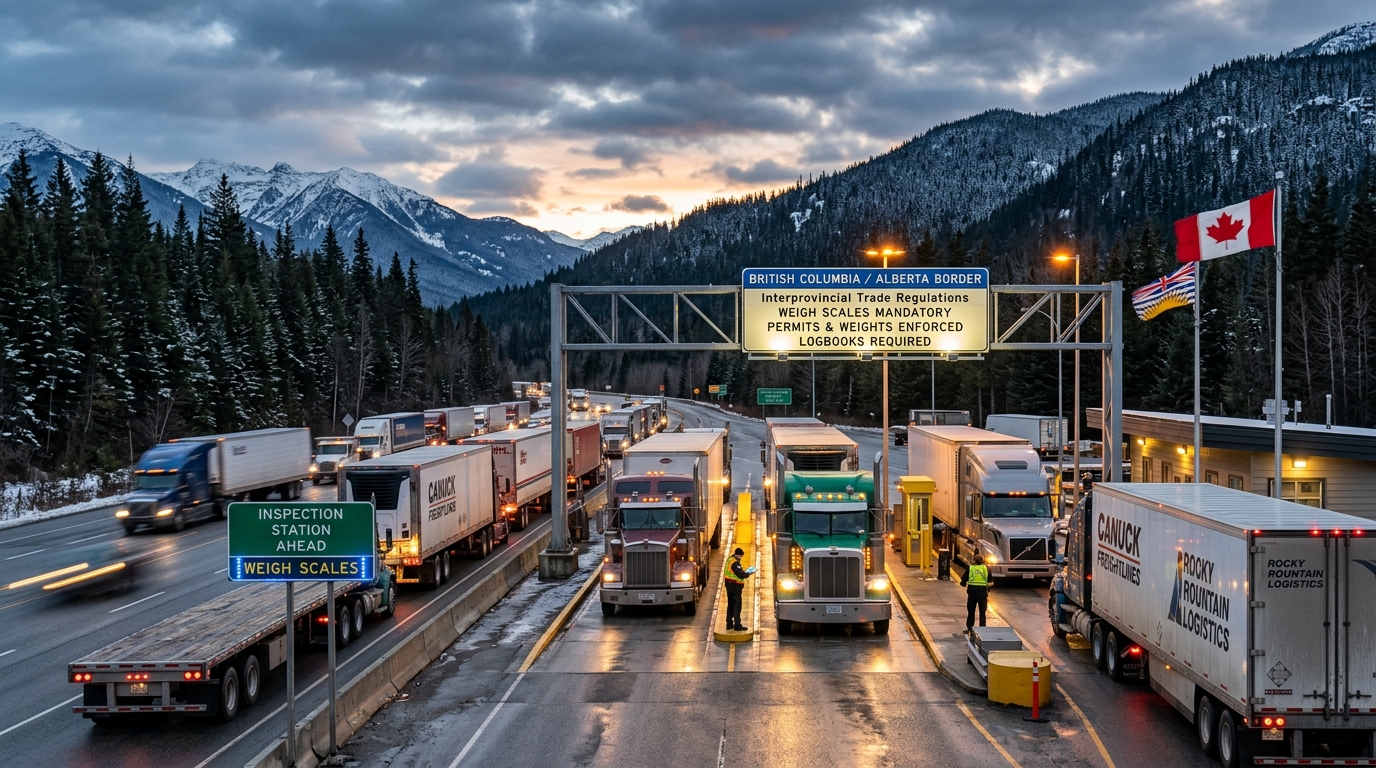
As Canadian policymakers and business coalitions mobilize to defend the national economy against cross-border tariffs under CUSMA renegotiations, an uncomfortable domestic reality hangs over the Canadian federation in 2026: it remains legally, bureaucratically, and logistically harder for a Canadian company to sell goods and services across provincial borders than to export directly to the United States. As explored across our investigative directives on the 2026 U.S.–Canada trade war, the consumer tariff hit list, and the financialization of the Canadian economy, internal trade barriers act as a self-inflicted $100 to $140 billion annual drag on Canadian Gross Domestic Product (GDP).
According to economic analyses from the Bank of Canada, the International Monetary Fund (IMF), and the Canadian Chamber of Commerce, interprovincial trade restrictions impose the equivalent of a 7% to 15% hidden tariff on domestic goods moving across provincial lines. In a country struggling with lagging labour productivity and escalating living costs, dismantling these internal regulatory walls represents the single largest non-inflationary growth opportunity in modern Canadian history. Here is the investigative anatomy of Canada’s internal trade crisis in 2026.
1. The Absurdity Ledger: How Provincial Red Tape Blocks Trade
Over 150 years after Confederation, Canada functions economically not as a unified single market, but as 13 fragmented regulatory fiefdoms:
- The Trucking & Transportation Nightmare: A commercial freight truck driving from Halifax to Vancouver encounters conflicting provincial tire weight regulations, varying axle-spread limits, differing wide-load permit rules, and disparate winter tire mandates. In several transport corridors, long-haul drivers are forced to swap trailers or reconfigure load weights at provincial border crossings.
- Alcohol & Agricultural Protectionism: Under provincial liquor monopolies (like the LCBO in Ontario and SAQ in Quebec), it remains legally restricted or heavily taxed for a British Columbia estate winery or a Nova Scotia craft brewery to ship bottles directly to an adult consumer in another Canadian province.
- Labour Mobility & Credential Bottlenecks: Despite severe national shortages of family doctors, registered nurses, and skilled construction tradespeople, licensed professionals in one province often face months of bureaucratic re-certification exams, fees, and paperwork before they are permitted to practice in an adjacent province.
- Procurement Discrimination: Provincial and municipal infrastructure contracts routinely include local preference rules that penalize or exclude Canadian bidding contractors located in other provinces, inflating public project construction costs by billions annually.
2. The Macroeconomic Toll: $140 Billion in Lost Wealth
The economic cost of internal trade barriers is not merely theoretical; it directly undermines the standard of living for Canadian workers and families:
- The 4% GDP Penalty: IMF economic modeling indicates that eliminating internal trade barriers would boost Canadian real GDP by approximately 3.8% to 4.4%—injecting over $110 billion in new economic output into the Canadian economy without spending a single dollar of taxpayer deficit funds.
- The Household Tax: The Canadian Federation of Independent Business (CFIB) estimates that the productivity loss and supply chain friction of internal barriers costs the average Canadian household approximately $1,500 every single year in higher consumer prices and depressed wage growth.
3. The Path to a True Internal Free Market: Mutual Recognition
Dismantling 13 separate provincial regulatory rulebooks does not require decades of complex constitutional renegotiation. Modern economists advocate a simple, turnkey solution: The Mutual Recognition Framework:
- Automatic Regulatory Equivalence: If a product, building material, vehicle configuration, or professional certification is legally certified and safe in Alberta, it is automatically recognized as legal and compliant in Ontario, Quebec, and British Columbia.
- The Australian Precedent: In the 1990s, Australia faced identical inter-state trade friction and implemented a federal-state Mutual Recognition Act, instantly harmonizing professional licensing and internal goods movement with zero loss in safety standards.
Internal Trade Friction vs. National Mutual Recognition in Canada (2026)
| Economic Dimension | Current Provincial Trade Barriers (2026) | National Mutual Recognition Framework |
|---|---|---|
| Impact on National GDP | -$100B to -$140B annual productivity drag | +3.8% to +4.4% non-inflationary GDP growth |
| Skilled Labour Mobility | Months of provincial re-licensing & fees | Automatic nationwide credential reciprocity |
| Freight & Logistics Friction | Conflicting axle, weight & safety rules | Unified national heavy transport standards |
| Direct Household Cost | ~$1,500/yr per family in higher retail costs | Lower prices via domestic competition |
People Also Ask (PAA)
What are interprovincial trade barriers in Canada?
Interprovincial trade barriers are provincial laws, regulations, and administrative standards (such as conflicting trucking rules, liquor monopolies, and professional licensing restrictions) that restrict the free movement of goods, services, and workers between Canadian provinces.
How much do internal trade barriers cost the Canadian economy?
Economic studies by the Bank of Canada, the IMF, and the Canadian Chamber of Commerce estimate that internal trade barriers reduce Canadian GDP by approximately $100 to $140 billion annually (roughly 4% of GDP), costing average households around $1,500 per year.
How can Canada eliminate trade barriers between provinces?
Canada can eliminate internal trade barriers by adopting a national “Mutual Recognition” framework, where goods, safety standards, and professional credentials certified in one province are automatically recognized as legal and valid across all other provinces.