
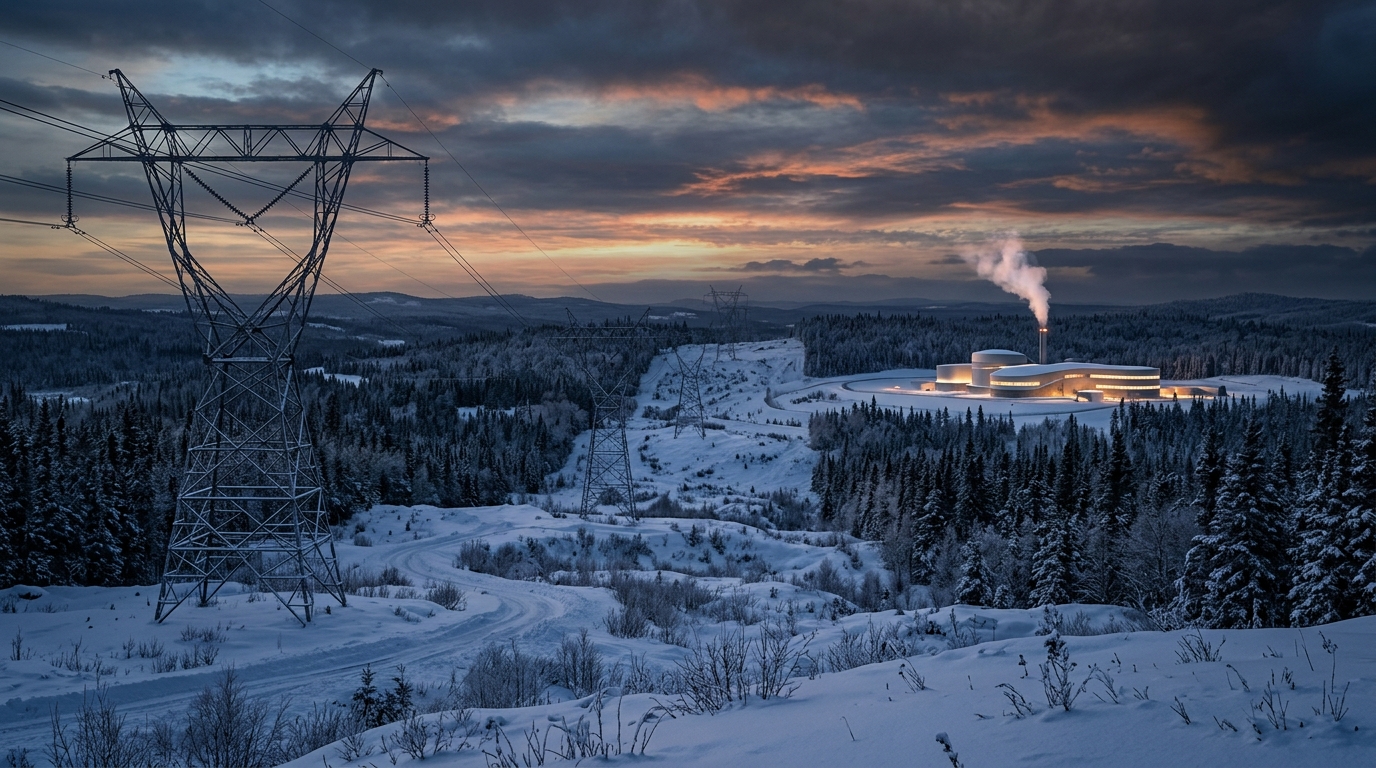
Canada’s ambitious transition to a net-zero future is colliding head-on with physics, climate geography, and aging electrical infrastructure in 2026. Under the federal government’s Clean Electricity Regulations (CER) and national zero-emission vehicle mandates (requiring 100% of new light-duty vehicle sales to be electric by 2035), millions of Canadian households are simultaneously converting from fossil fuels to electric heat pumps and battery-electric vehicles (EVs). However, as documented in our investigative reports on community power sovereignty, the critical mineral requirements for the clean transition, and the broader urban housing infrastructure bottleneck, electrifying Canada’s economy requires doubling or tripling total national generation capacity.
When sub-zero polar vortexes drop temperatures below -40°C across the Prairies and Ontario, solar generation plunges and wind output can stall. In response to mounting grid reliability warnings, provincial utilities and federal policymakers have sparked a multi-billion-dollar nuclear renaissance: betting Canada’s baseload survival on Small Modular Reactors (SMRs).
1. The Dual-Electrification Squeeze: The Megawatt Math
The scale of electrical demand growth facing provincial grid operators (IESO in Ontario, AESO in Alberta, SaskPower, Hydro-Québec, and BC Hydro) is unprecedented in modern Canadian history:
- Heating vs. Driving: In Canadian winters, heating space and water consumes significantly more energy than transportation. Transitioning suburban single-family homes and dense condo towers from natural gas furnaces to cold-climate electric heat pumps during peak heating hours (6:00 AM – 9:00 AM and 5:00 PM – 8:00 PM) creates massive, localized grid spikes.
- EV Charging Concurrency: A single Level 2 home EV charger draws between 7.2 kW and 11.5 kW—equivalent to running an entire modern home with all appliances simultaneously. When hundreds of vehicles in a single neighborhood plug in at 6:00 PM, neighborhood distribution transformers face extreme thermal overload risks.
2. The Small Modular Reactor (SMR) Renaissance
Unlike traditional gigawatt-scale nuclear stations (such as Bruce Power or Pickering) which require 10 to 15 years and tens of billions to build, Small Modular Reactors (SMRs) produce between 50 MW and 300 MW of zero-emission baseload power, built in factory modules and shipped directly to site:
- Darlington SMR (Ontario Power Generation): Ground zero for North America’s first commercial SMR deployment is OPG’s Darlington site in Clarington, Ontario, featuring GE Hitachi’s BWRX-300 water-cooled SMR. Designed to power roughly 300,000 homes, the project serves as the global blueprint for small-footprint nuclear power.
- The Western Alliance (Saskatchewan & Alberta): Facing federal mandates to phase out unabated natural gas and coal generation, SaskPower is advancing plans to deploy two SMR units in the Estevan/Elbow regions by the early 2030s to anchor baseload power on a grid with limited hydroelectric dam geography.
- New Brunswick & ARC Clean Energy: Advancing advanced sodium-cooled fast reactors capable of recycling spent nuclear fuel and delivering high-temperature industrial steam.
3. The Federal-Provincial Net-Zero Feud
While the federal government’s Clean Electricity Regulations aim for a net-zero national electricity grid, Western premiers argue the regulations impose unrealistic timelines that risk winter blackouts:
- The Baseload Problem: Hydro-rich provinces (Quebec, Manitoba, British Columbia) generate over 85% of their electricity from massive, dispatchable hydro reservoirs. In contrast, Alberta and Saskatchewan lack large hydro capacity and historically rely on natural gas for rapid peaking support during extreme cold.
- The Cost to Ratepayers: Upgrading transmission lines, building utility-scale battery storage, and deploying SMR fleets is projected to cost over $400 billion across Canada by 2040, sparking fierce political debate over how much will be passed directly onto household hydro bills.
Canada’s Power Generation Transition: Baseload Tech Comparison (2026)
| Energy Source | Capacity Factor & Winter Reliability | Emissions Profile & Grid Role |
|---|---|---|
| Small Modular Reactors (SMRs) | 90%+ (Continuous 24/7/365 Baseload) | Zero Direct Carbon Emissions (Compact Footprint) |
| Large-Scale Hydroelectric Dams | 80% – 90% (Highly Dispatchable) | Near-Zero Emissions (Limited to specific river basins) |
| Natural Gas Peaker Plants | 95%+ (Instant 10-minute dispatch) | Fossil Fuel Emissions (Subject to Federal CER limits) |
| Wind & Utility-Scale Solar | 25% – 38% (Intermittent / Polar Drops) | Zero Emissions (Requires costly battery backup) |
People Also Ask (PAA)
Can Canada’s electrical grid handle 100% electric vehicles?
Canada’s current electrical generation and local distribution grids cannot support 100% EV adoption and electric heating without massive expansion. Grid operators estimate Canada will need to double total electricity generation by 2050 to meet peak winter demand.
What is a Small Modular Reactor (SMR)?
A Small Modular Reactor is an advanced nuclear fission reactor that produces up to 300 megawatts of electricity (about one-third the capacity of traditional nuclear reactors), manufactured in factories and assembled on-site to reduce construction time, capital costs, and physical footprint.
Where is Canada building its first commercial SMR?
Canada’s first commercial grid-scale SMR is currently under construction at Ontario Power Generation’s (OPG) Darlington Nuclear site in Clarington, Ontario, utilizing GE Hitachi’s BWRX-300 reactor design, scheduled for completion in the late 2020s.