
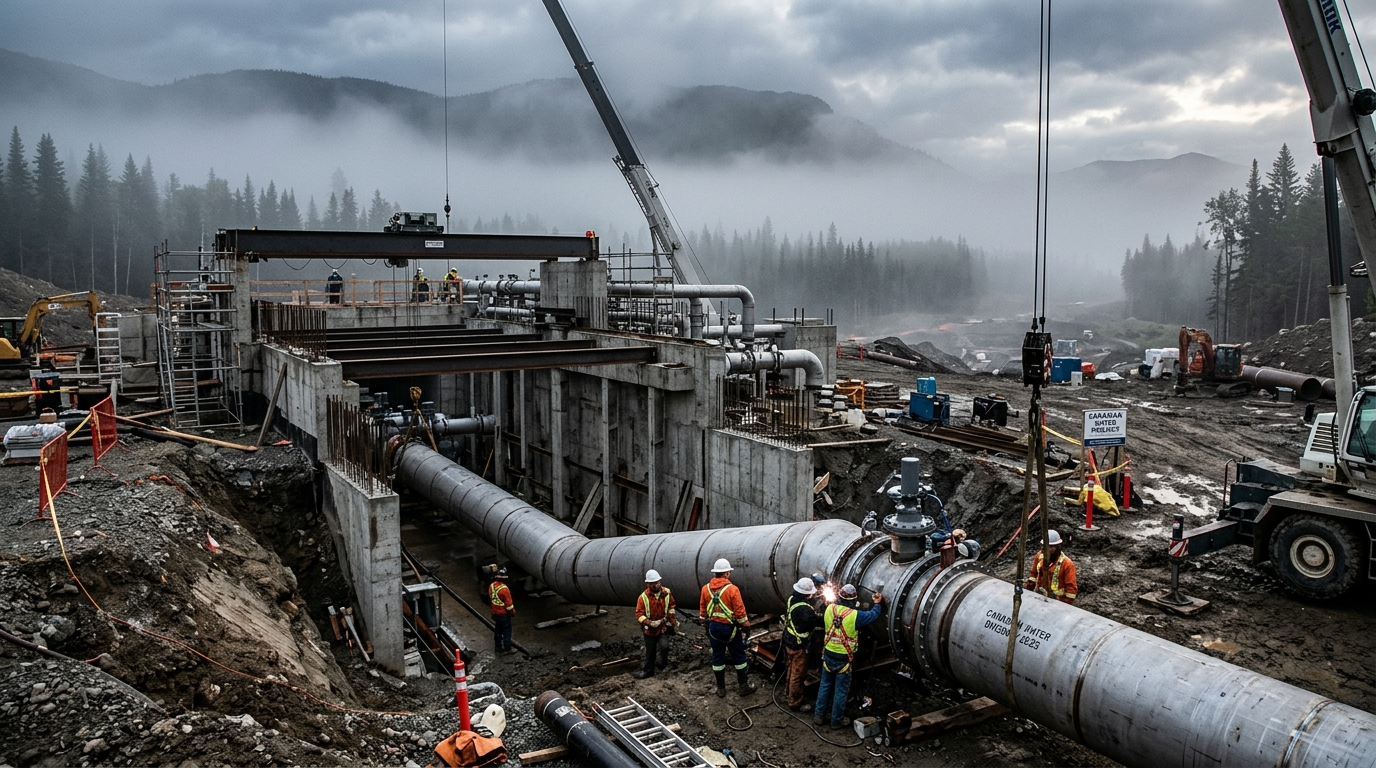
Canada holds approximately 20% of the world’s total freshwater supply and 7% of its renewable freshwater flow. Yet, beneath the pavement of Canada’s major cities and across dozens of remote Indigenous communities, the physical systems delivering that water are quietly decaying. In 2026, the national backlog to repair, replace, and modernize municipal drinking water, wastewater, and stormwater infrastructure has ballooned past $60 billion, according to municipal engineering assessments from the Federation of Canadian Municipalities (FCM).
As explored across our investigations on Canada’s freshwater vulnerabilities, Indigenous resource sovereignty, and the structural housing crisis, clean drinking water is the most fundamental public utility in a developed democracy. When cast-iron water mains installed during the post-war era reach the end of their 75-year structural lifespan, the fiscal gap between cash-strapped municipal tax bases and federal infrastructure transfers threatens public health and halts new housing construction nationwide.
1. The Anatomy of the Municipal Pipe Crisis
Canada’s municipal water crisis is defined by three converging structural bottlenecks:
- The 1950s Pipe Replacement Cliff: Over 30% of Canada’s underground water distribution mains were laid between 1950 and 1975 using cast iron, ductile iron, and asbestos-cement. Today, these pipes are fracturing at record rates during freeze-thaw cycles, leaking an estimated 15% to 25% of treated drinking water before it ever reaches household taps.
- The Toxic Lead Service Line Backlog: An estimated 450,000 to 600,000 legacy lead service lines remain active across older urban neighborhoods in Montreal, Toronto, Hamilton, and Halifax. While Health Canada lowered the maximum allowable lead concentration to 5 parts per billion (ppb), municipal replacement programs are projected to take until 2038 at current funding rates.
- Wastewater Treatment & Climate Surges: Intense precipitation events regularly overwhelm combined sewer systems in older cities, discharging billions of liters of raw untreated sewage and stormwater into Lake Ontario, the St. Lawrence River, and coastal waterways annually.
2. The Fiscal Mismatch: Municipalities Carry 60% of Assets with 10% of Tax Revenue
Why are Canadian cities unable to fix their water systems? The root cause is a broken fiscal structure embedded in the Canadian federation:
Canadian Water Infrastructure Asset Breakdown vs. Tax Revenue Allocation (2026)
| Level of Government | Share of Public Infrastructure Owned | Share of Every Tax Dollar Collected | Primary Revenue Tool |
|---|---|---|---|
| Municipalities (Cities & Towns) | ~60% (Pipes, roads, treatment plants) | ~8 to 10 Cents | Property taxes & utility user fees (Inelastic) |
| Provincial Governments | ~38% (Highways, hospitals, schools) | ~42 Cents | Income tax, sales tax (PST/HST), royalties |
| Federal Government (Ottawa) | ~2% (Ports, national assets, crown lands) | ~50 Cents | Income tax, GST, corporate taxes (Broad base) |
3. First Nations Drinking Water: The Ongoing Sovereignty Battle
While urban centers struggle with aging mains, the humanitarian crisis of clean water access in First Nations communities remains a national disgrace:
- Persistent Long-Term Advisories: Despite billions allocated since 2015 and the lifting of over 140 long-term advisories, more than 30 First Nations communities in 2026 remain under active drinking water advisories—some lasting over two decades (such as Neskantaga First Nation).
- Operations & Maintenance (O&M) Underfunding: Building a high-tech water filtration plant is only half the battle. Federal funding formulas have historically covered only 80% of estimated O&M costs, leaving remote communities unable to retain certified water treatment operators or purchase expensive replacement filtration membranes.
- Bill C-61 and Indigenous Water Rights: The proposed First Nations Clean Water Act (Bill C-61) aims to recognize First Nations inherent jurisdiction over water governance on reserve lands. However, Indigenous leaders emphasize that legislative recognition is hollow without legally binding, sustainable long-term funding guarantees.
Water pipes buried six feet underground do not win elections, which is why politicians have deferred replacement investments for half a century. But in 2026, Canada’s water grid has reached a critical breaking point. You cannot build 3.8 million new homes to solve the housing crisis if city water mains cannot handle the flow, and Canada cannot claim moral leadership while First Nations families still boil their water. Fixing Canada’s $60 billion water deficit requires a permanent, predictable federal infrastructure transfer mechanism insulated from short-term election cycles.
People Also Ask
What is the municipal infrastructure deficit in Canada?
The Canadian municipal infrastructure deficit is estimated at over $60 billion for water, wastewater, and stormwater systems alone, representing the cumulative funding backlog required to repair and replace aging public assets.
How many First Nations communities in Canada still have boil water advisories?
As of 2026, approximately 28 to 32 First Nations communities remain under active long-term drinking water advisories, despite significant federal remediation spending over the past decade.
Why are Canadian cities struggling to replace water pipes?
Canadian municipalities own over 60% of all public infrastructure but receive less than 10 cents of every Canadian tax dollar, leaving them heavily reliant on property taxes that cannot keep pace with multi-billion-dollar pipe replacement costs.
Are there still lead water pipes in Canadian cities?
Yes. Between 450,000 and 600,000 legacy lead service lines remain active across older neighborhoods in major cities like Montreal, Toronto, and Halifax, where full municipal replacement programs will take another decade to complete.