
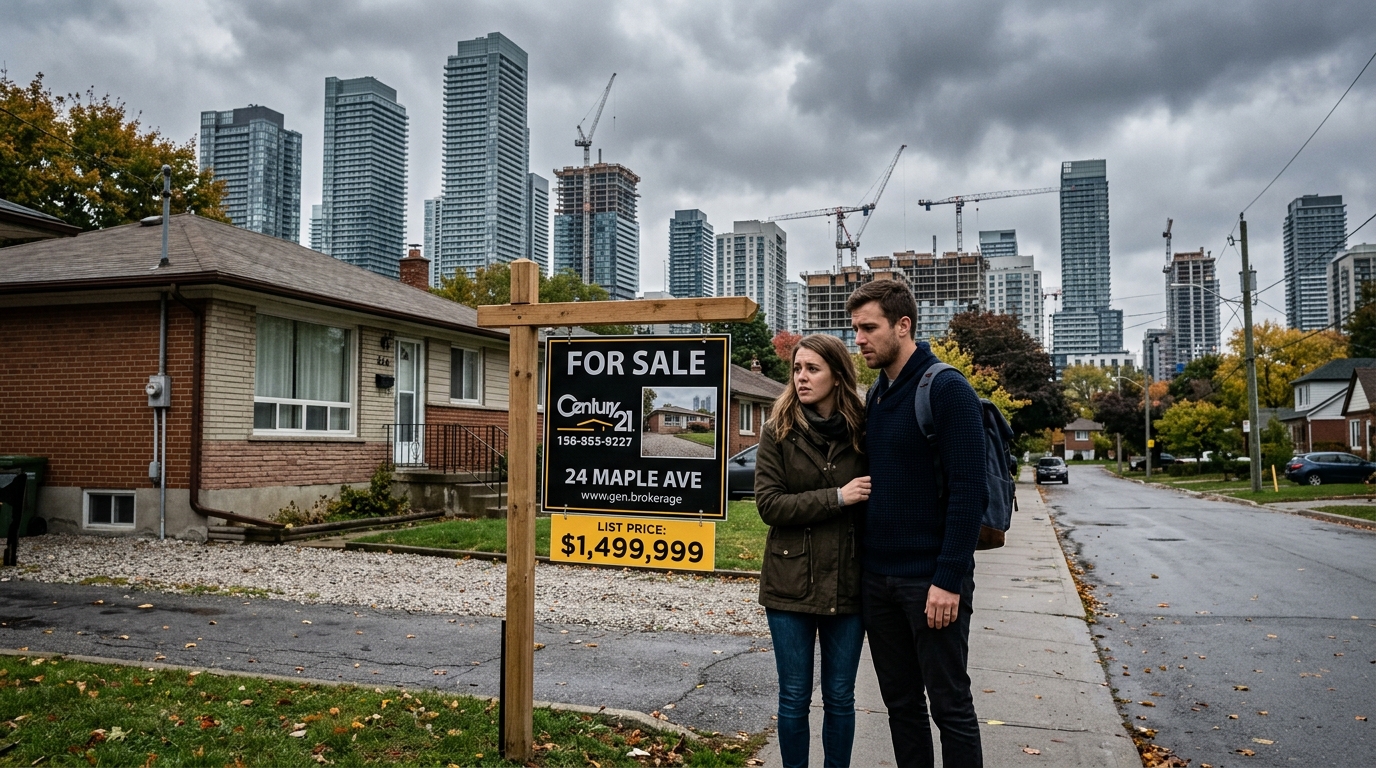
In the spring of 2026, a two-bedroom bungalow in Oshawa sold for $1.47 million to a real estate investment trust. The young teacher and logistics coordinator who offered $1.38 million walked away, as they had from eleven previous properties. They now rent a basement apartment in Barrie for $2,200 a month. This is not an outlier. This is the defining economic story of an entire Canadian generation.
As The Northern Star has documented across investigations into Canada’s $100 billion internal trade barriers, the $30 billion battery gamble, and the cross-border trade war reshaping Canadian livelihoods, the housing crisis is the downstream consequence of cascading policy failures stretching back two decades.
1. The Arithmetic of Exclusion
- Toronto (GTA): Median detached home: $1.38M. Required gross household income: $218,000/yr. Median Toronto dual-income household: $134,000/yr. Gap: $84,000/yr.
- Vancouver (Metro): Median detached home: $1.71M. Required income: $269,000/yr. Median Vancouver household: $128,000/yr. Gap: $141,000/yr.
- Calgary: Median home: $787,000 — up 61% since 2020. The formerly affordable western alternative has evaporated.
2. Three Compounding Failures
Supply Deficit: CMHC requires 3.5 million additional units by 2030. Canada is building ~240,000/year — half the needed pace.
Financialization: REITs and corporate landlords own 20-25% of urban rental stock. REIT tax reform has stalled three times since 2021.
Immigration-Infrastructure Mismatch: 485,000 permanent residents arrived in 2024 with no coordinated housing infrastructure mandate.
Canada Housing Affordability Index (2026)
| Metric | 2016 | 2020 | 2026 |
|---|---|---|---|
| National Avg Home Price | $490,000 | $621,000 | $847,000 (+72%) |
| Median Household Income | $70,300 | $84,000 | $98,100 (+39%) |
| First-Time Buyer Share | 47% | 38% | 24% (Historic Low) |
| Annual Units Built | 195,000 | 218,000 | 243,000 (50% of target) |
People Also Ask
Why is Canadian housing so expensive in 2026?
Three compounding failures: chronic under-building, REIT financialization of shelter, and record immigration without coordinated housing infrastructure investment.
Will Canadian housing prices drop in 2026?
No meaningful decreases are projected. Supply constraints, population growth, and institutional investor demand maintain upward pressure despite higher mortgage rates.
What is the Canadian government doing about the housing crisis?
Federal measures include the FHSA, 30-year amortizations, and a $4B Housing Accelerator Fund — critics argue these demand-side tools are insufficient without dramatic supply increases.